Research on water-related challenges in the mining industry is gaining ground
News
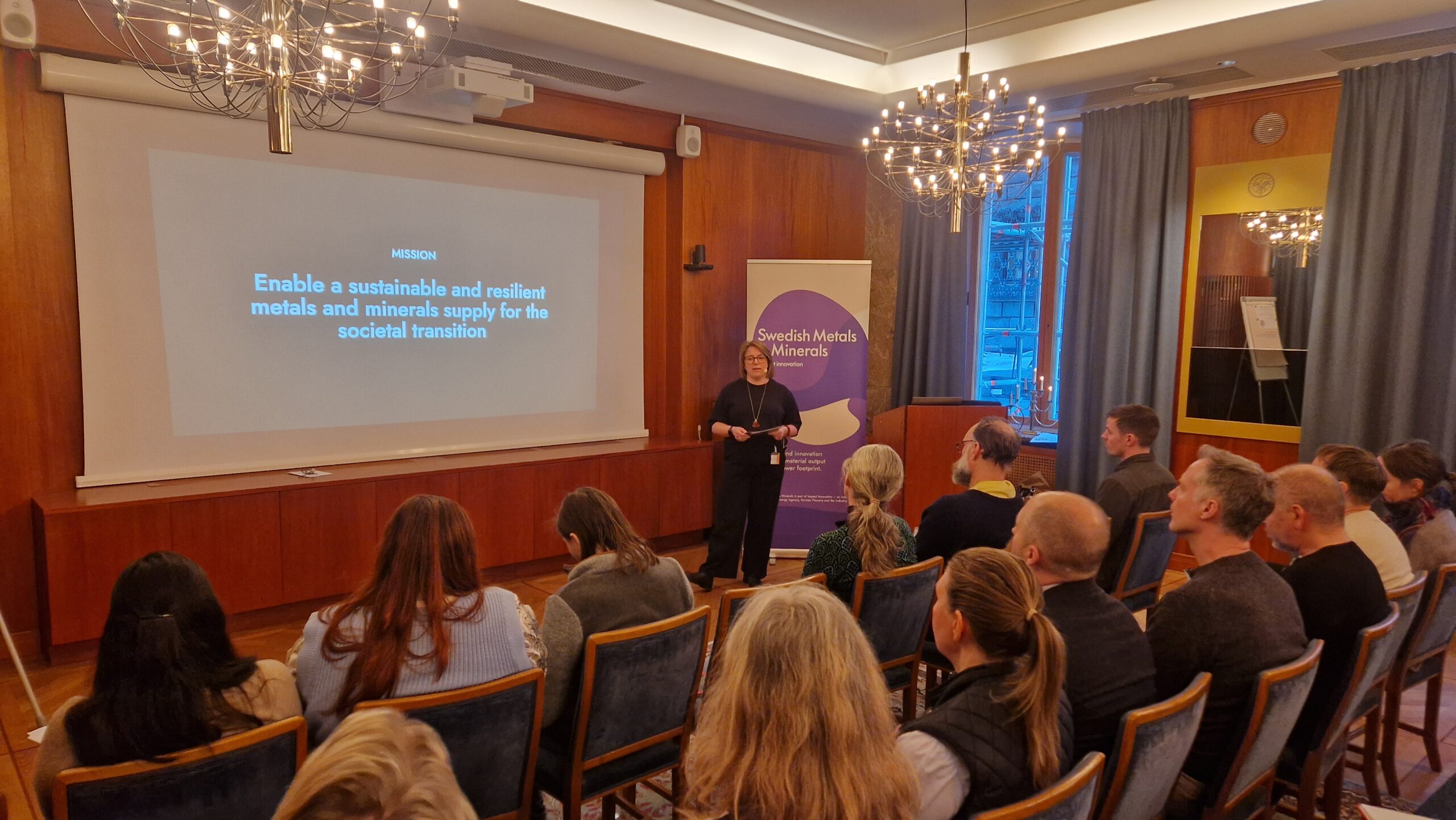
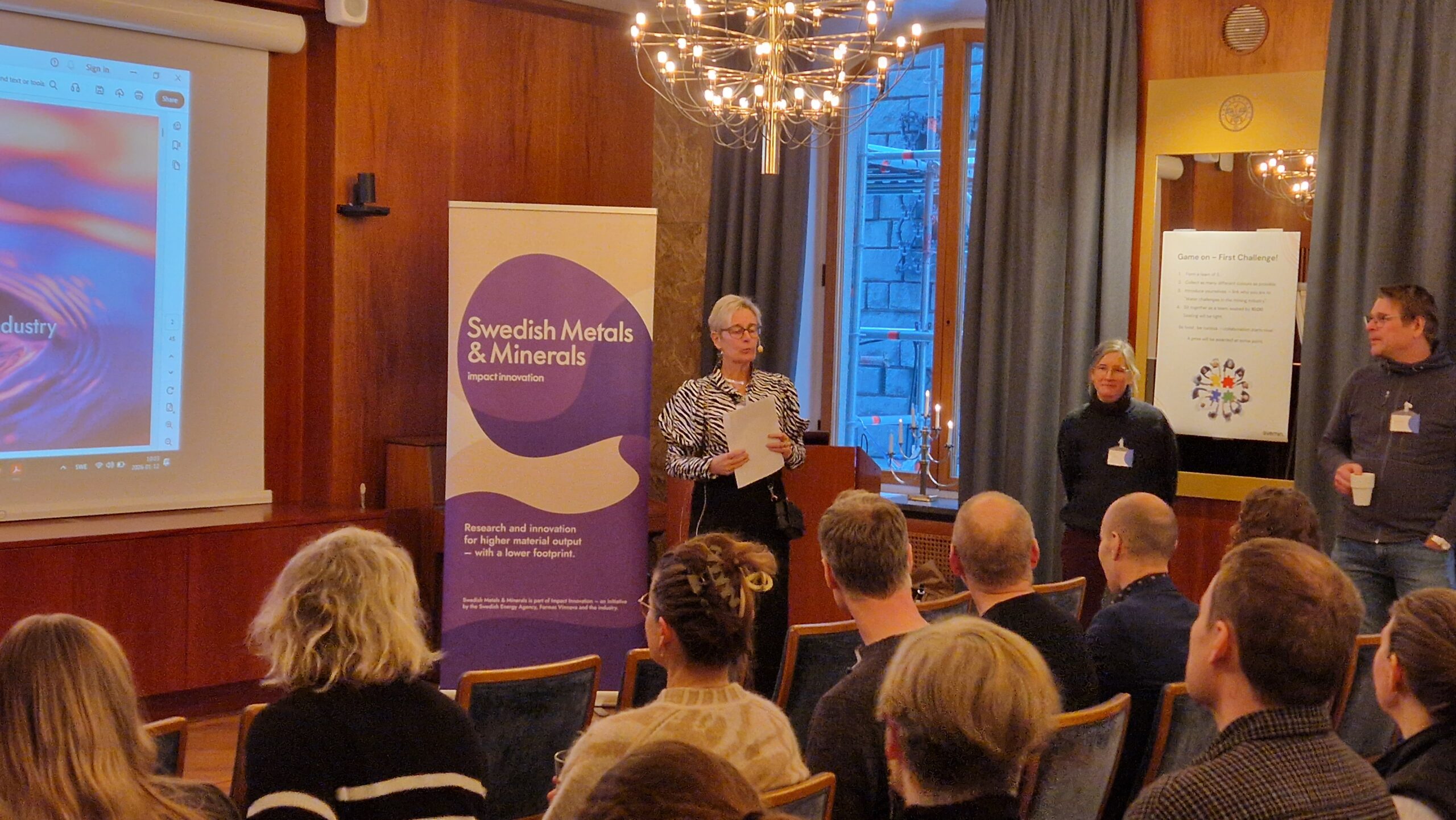
– New research and broad collaboration are required to address the sector’s water challenges
How do we move water-related research in the mining and minerals sector closer to real environmental and societal impact? This question was at the heart of the seminar Water Challenges in the Mining Industry – Research, Collaboration and Opportunities, organized by Svemin and Swedish Metals & Minerals on 12 January at Jernkontoret in Stockholm.
Interest in the event was high. All seats were filled well before registration closed, and around 60 participants from academia, industry and funding organizations attended. The strong response clearly shows that water-related issues are no longer peripheral, but central to the transition towards a more sustainable mining industry – and that the need for coordinated, impact-oriented research is now evident.
The purpose of the day was to strengthen collaboration and lay the foundation for new research addressing water challenges in the mining sector. Particular emphasis was placed on research that can improve our ability to monitor, understand and safeguard receiving waters over time. Achieving this requires scientifically robust methods that go beyond regulatory compliance and that cannot be fully addressed within existing frameworks, such as the terminology and scope of the EU Water Framework Directive.
The program combined a seminar session with an interactive workshop, allowing participants to jointly explore research needs, funding opportunities and approaches to long-term collaboration between academia, industry and funding bodies.
The day opened with remarks by Kristina Branteryd, Head of Environment and Sustainability at Svemin and initiator of the seminar. She highlighted the importance of creating arenas where different disciplines and sectors can come together to initiate research that leads to real change. Drivers such as stricter regulations, upcoming research calls and a growing global demand for metals and minerals mean that water-related challenges now require a more coordinated and collective effort.
The first speaker, Kerstin Brinnen, Legal Counsel at LKAB, addressed the increasing global demand for metals and minerals. This trend implies that new mines will need to be developed at a faster pace, placing greater demands on how water issues are managed already at early project stages. In an uncertain global context, she argued, the industry cannot afford a wait-and-see approach, but must stay at the forefront of sustainable water management.
This was followed by a presentation by Erik Ronne, Head of Sustainability Research at Boliden, who outlined how the company’s sustainability-related research is organized. He provided insights into how academic collaboration projects are initiated, structured and funded, and emphasised the importance of long-term partnerships between industry and research.
Tobias Kampmann, Programme Manager at Vinnova, gave an overview of current and upcoming funding calls related to water challenges in the mining sector. He also presented the RAMP initiative and highlighted opportunities for research funding at the European level.
The seminar session concluded with presentations from two Impact Innovation programs. Maria Swartling, Program Director of Swedish Metals & Minerals, introduced the program’s mission, activities and relevance. Together with Lawrence Hooey, Head of Technological Innovation, she explained how stakeholders can engage in the program. Several ongoing research projects within Swedish Metals & Minerals were also briefly presented.
Anna-Maria Sundin, Deputy Program Director of Water Wise Societies, presented the program’s focus areas and current funding opportunities. She emphasised how water-related research acts as a common denominator linking the missions of both Impact Innovation programs.
The afternoon was dedicated to a workshop focusing on water challenges in the mining industry. The workshop combined short presentations with interactive elements. Inputs from industry and funding organizations set the framework for discussions, highlighting the global demand for metals and minerals, the long-term impacts of process chemicals on aquatic environments, and opportunities within existing research funding schemes.
Through group exercises and open dialogue, discussions quickly gained momentum. Participants identified shared points of interest, asked questions across disciplinary boundaries and developed ideas that connected industrial needs with academic expertise. Conversations continued well into the afternoon and during the closing coffee session.
Particular attention was given to two areas where research needs are especially pressing: the occurrence and effects of process chemicals in water, and the development of modern biological monitoring approaches capable of capturing complex ecosystem effects more robustly than current regulatory frameworks allow. For both areas, it became clear that future progress requires broad, interdisciplinary research efforts.
The day concluded with a summary by Kristina Branteryd and a joint reflection from participants. In the subsequent evaluation, participants highlighted that the seminar filled an important gap by creating space for questions and perspectives that are rarely addressed in more traditional meeting formats.
“I am extremely pleased with the day. The level of engagement in the room was tangible, and it was clear that both researchers and industry representatives wanted more than just to listen – they wanted to work together and find solutions. This is exactly what is needed to get research moving forward in a meaningful way,” says Kristina Branteryd.
With new connections, concrete ideas and a strong willingness to continue collaborating, there are now good conditions for taking the next steps. The ambition is to build on this momentum and create more arenas where research can develop in line with the evolving needs of the mining sector.