Tiny Villages – New housing models for a growing industry
News
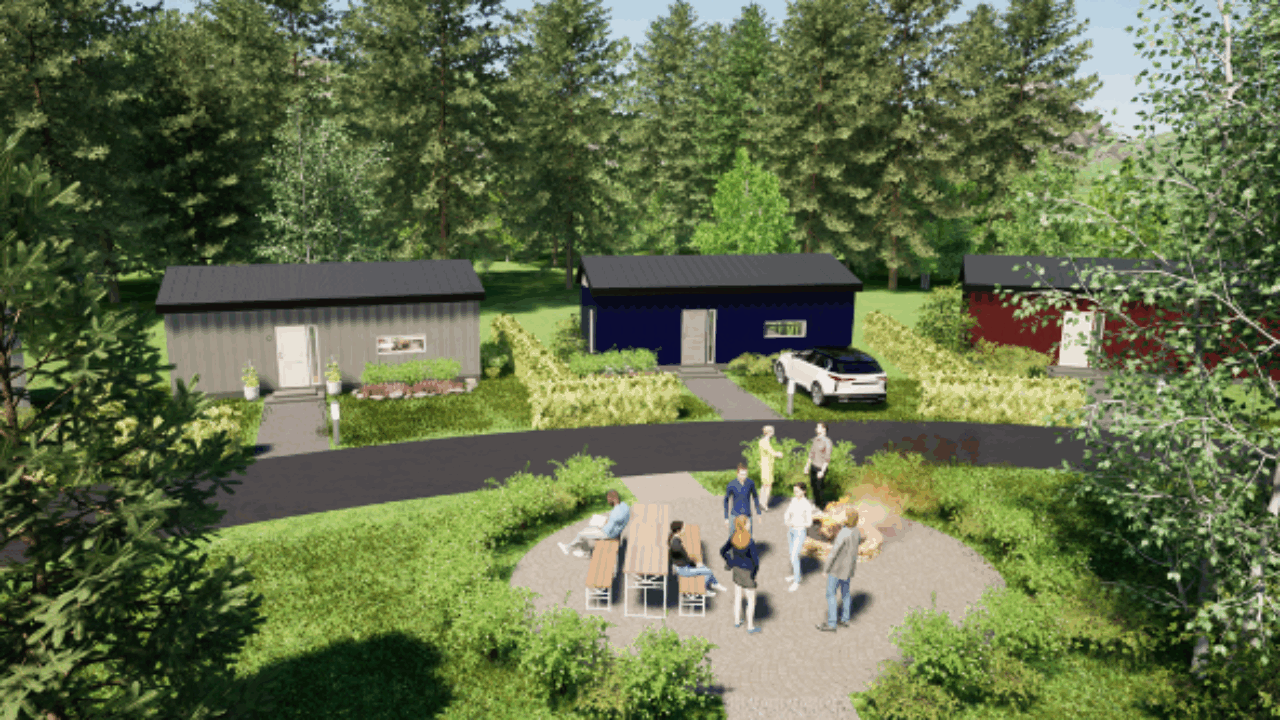
Tiny Villages – New housing models for a growing industry
As industry in northern Sweden expands faster than housing construction, new solutions are needed. The Tiny Villages feasibility study shows how small-scale, flexible and socially sustainable housing concepts can become a key factor in attracting labour and strengthening long-term regional competitiveness.
The rapid industrial expansion in northern Sweden has created a clear imbalance between the business sector’s demand for labour and municipalities’ ability to provide attractive housing at the same pace. Tiny Villages, one of the first projects funded within Swedish Metals & Minerals, has explored new, sustainable housing concepts.
The research project examined the concept of Tiny Villages as a potentially flexible and socially sustainable housing model. The focus was on analysing how this type of housing solution can meet the needs of mining and industrial regions where demand for labour is increasing rapidly and where traditional housing development processes are often time-consuming.
“Finding new housing models is crucial for the region’s continued competitiveness. Without attractive, safe and flexible housing, industrial investments risk being constrained, as the ability to attract and retain labour is weakened. This is particularly important for groups such as women, young people and international employees, who often have high expectations regarding both housing quality and social safety. Housing therefore becomes not only a physical planning issue, but also a central part of skills supply and social sustainability,” says Lars Oscarsson, LTU Business, project manager for Tiny Villages.
The aim of Tiny Villages has been to develop a deeper understanding of the social, legal and economic conditions required for the concept to be feasible, attractive and sustainable over time. The analysis showed that several complex challenges are linked to new forms of housing. These include legal barriers—particularly issues related to collateralisation—as well as risks of social isolation and unclear ownership structures. These challenges were addressed through legal analyses, studies of good practice, interviews and the development of guidelines to strengthen safety, participation and sustainable financing solutions.
Close and well-functioning collaboration between actors with different areas of expertise has been an important success factor. By combining knowledge in design, social sustainability, spatial planning and innovation management, the project was able to examine Tiny Villages from multiple perspectives and develop a more comprehensive understanding of the concept’s opportunities and limitations.
“The results of the work have clarified which factors are crucial for socially sustainable Tiny Villages. Legal barriers have been mapped, business and ownership models have been analysed, and guidelines for safety, gender equality and attractiveness have been developed. Together, this work has laid the foundation for a forthcoming handbook intended to support future implementations,” says Oscarsson.
The work now continues in a full-scale project, Tiny villages: A sustainable complement for attractive and rapid housing provision, where previous analyses are translated into practical application. This phase includes the development of simulations of three Tiny Village neighbourhoods, new financing models, off-grid solutions and standardised establishment processes. During the period 2025–2027, tools, guidelines and policy support will be developed with the aim of making Tiny Villages a realistic and scalable housing option for growing industrial and mining regions.
Partners: LTU Business, Luleå tekniska universitetet och Kiruna växer
Image caption: Illustration by Rebecca Wahlin, Ellen Wredendal, Alma Skog, Nadia Äärlaht and Edvin Norrman, Department of Economics, Technology, Art and Society at Luleå University of Technology, produced within a project for Granholmen Träteknik.